Using Research to Relocate
12 September 2018
Courtney asked me to address this topic: I live in the Netherlands and I still teach full-time at Medaille.
How did that happen?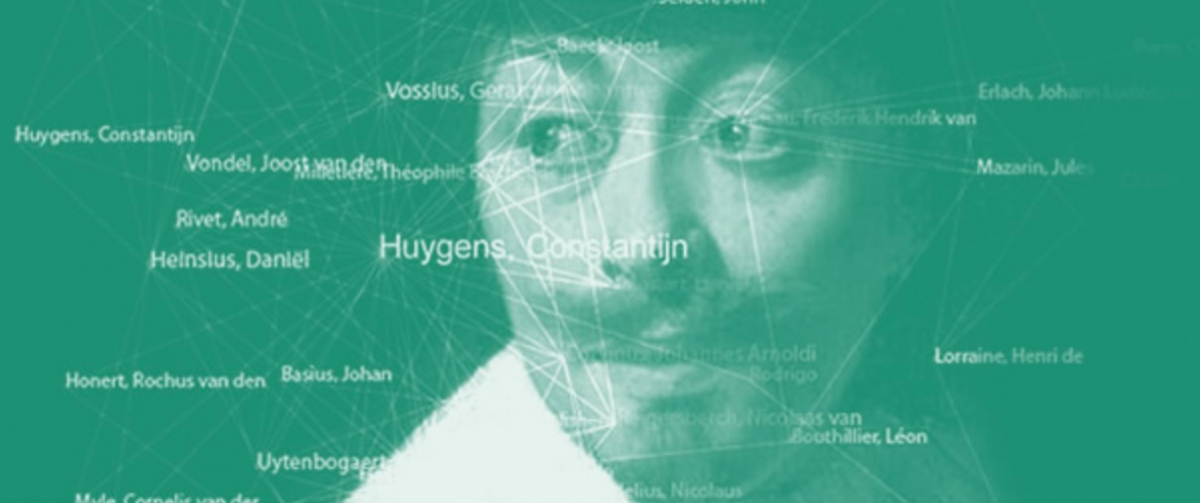
Just as the question has two parts, so does the answer.
The Netherlands part
Ten years ago, when I began to consider living here permanently, I learned that my options were few.
- Buy a share of a Dutch company; even better, start my own
- Marry a Dutch citizen
- Find a sponsor
Clearly, the third one was the way to go. Since my main activity here is my Leeuwenhoek project, I soon found my way to the Huygens Institute for Dutch History, a Dutch government-funded digital humanities research center. As it turned out, the Huygens also covers pre-modern Dutch history, so my research, which I’m documenting at Lens on Leeuwenhoek, was right at home.
The Huygens Instituut is funded by the government’s Organization for Scientific Research (NWO). To the Dutch, I base all my research on documented evidence, so I’m a scientist, for whom different immigration rules apply. The good people at the Huygens value my research enough to sponsor me with the Dutch immigration authorities. They even filled out the forms! All I did was appear in person to pick up my residence permit, the equivalent of the U.S. green card.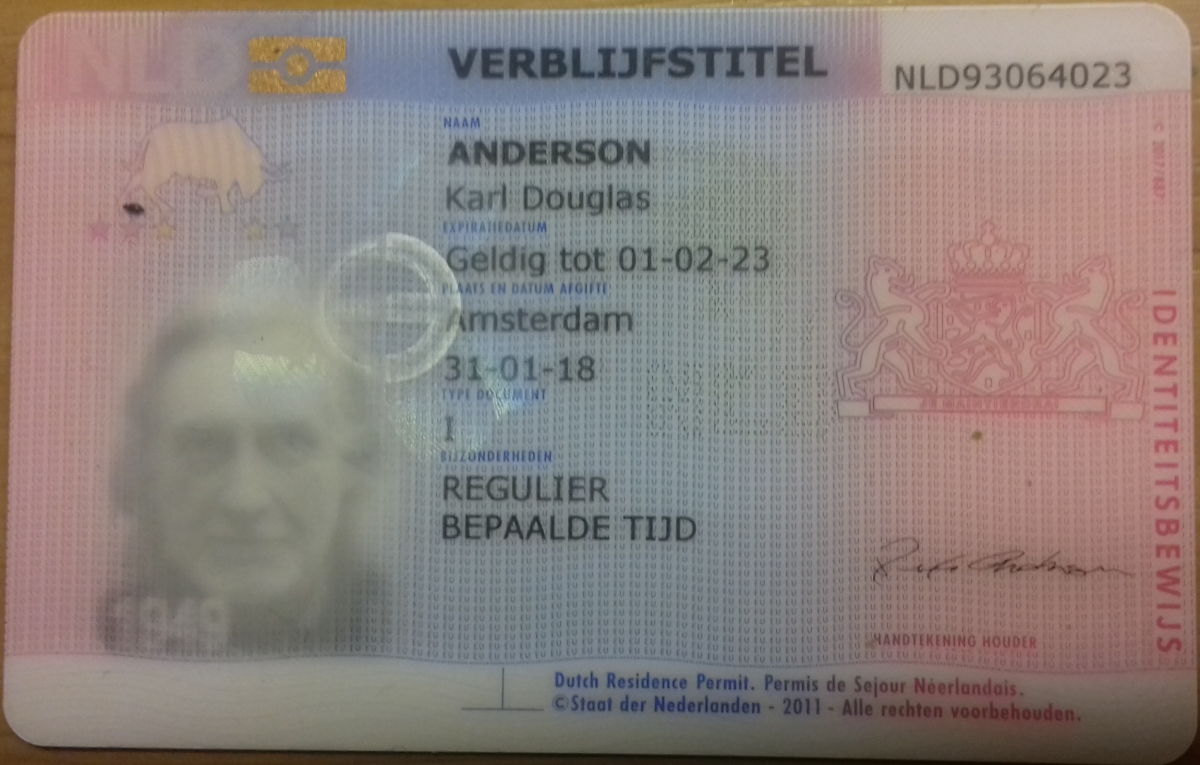
If all goes well, in five years I can either renew my permit as a U.S. citizen or go on the path for full Dutch citizenship. Either way, at this point I can stay here as long as I want.
The Medaille part
On May 1, 2017, Dr. Quigley told me that I should teach all of my courses online and go to live in the Netherlands. Yes, ma’am! I did not expect that nor had I ever asked for it. Dr. Quigley made it clear that I should tell the faculty that this career path is open to them, too.
What advice do I have?
To generalize from my experience:
Find a place where you want to live
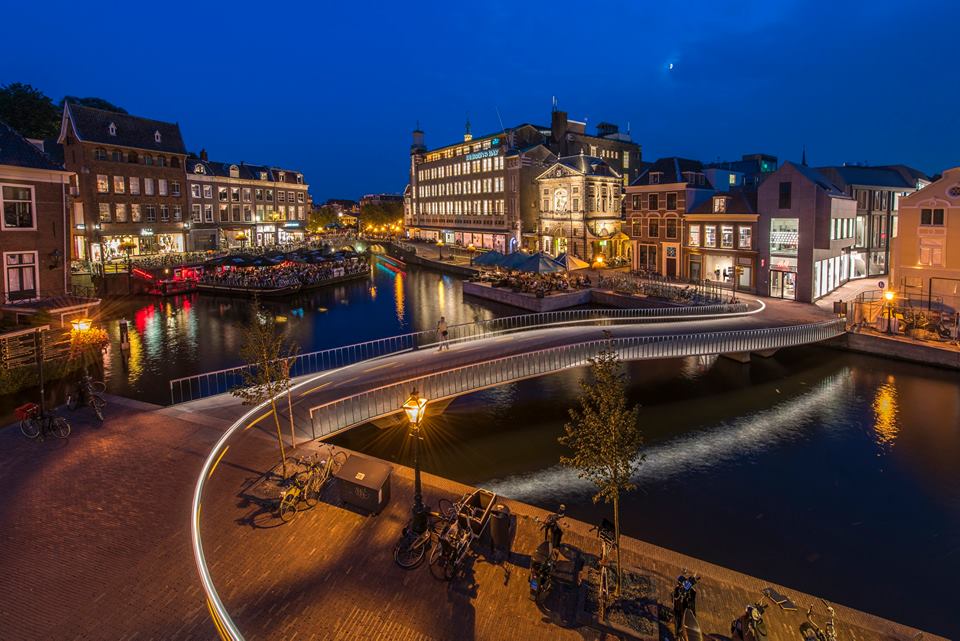
I live in Leiden, about 20 miles south of Amsterdam (click to enlarge).
 Find a way to contribute
When I first arrived, I knew no one, nor did I know a word of Dutch. By the third month, I had found a gap in the research about this country’s culture heritage.
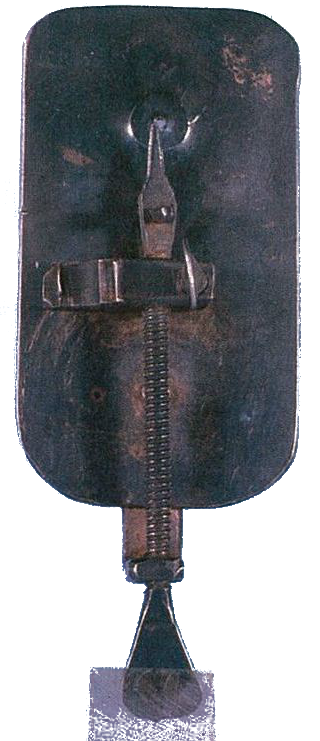
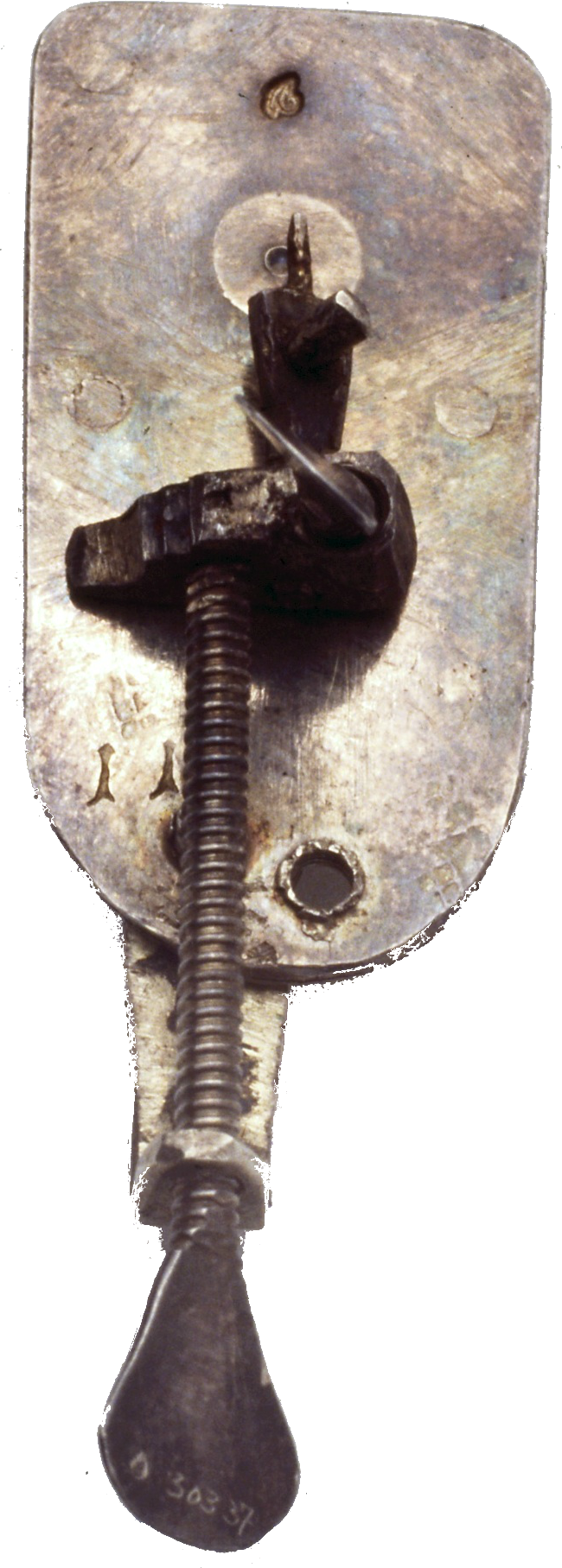
No one had ever systematically searched the Delft city archives for documents about Antony van Leeuwenhoek, who used hand-made microscopes like the ones on the right to become the first person to see the microworld of protozoa, bacteria, blood cells, and sperm. I have taken thousands of photographs of 17th century documents, almost all of them hand-written, relating to the life of Leeuwenhoek, his family, and his close colleagues. It wasn’t long before I knew more about him than anyone, which is one of the advantages of finding a gap. Many of the Delft archive documents are coming online, making some searches jaw-droppingly easy and giving me hi-res scans.
The document on below right (click to enlarge) is from the Delft notary archives. It is the signature page of the contract for the purchase of Leeuwenhoek's home on 16 February 1655.
Make your contribution known
I put my research online as I do it. I have been running my own web servers and databases since 1998, so I used the Drupal content management framework to tailor a content management system to my specific data set. Lens on Leeuwenhoek has over 400,000 words and thousands of images, always growing, making it the most comprehensive resource about the life of Leeuwenhoek, online or off.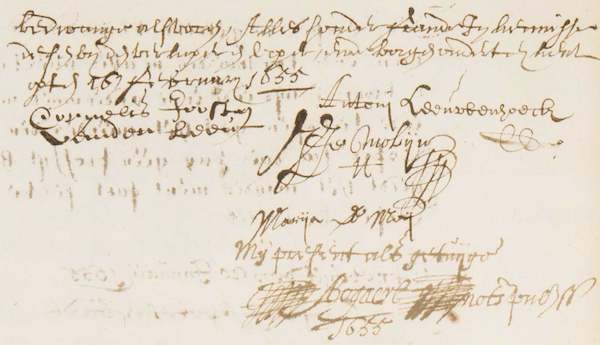
Until I moved here, every important professional opportunity that came my way started at that web site.
Keep showing up
Before I moved here, I had spent 40% of the previous nine years in the Netherlands: three eight-month stints and every summer. (Thank you, Sabbatical Committee! Thank you, Faculty Development Committee!)
Acculturate
I enthusiastically participate in the bicycle culture. I can read Dutch and I can speak it well enough to participate at meetings and carry on a reasonably intelligent conversation at parties. I can make people laugh in Dutch. I learned Dutch history, geography, and cultural traditions, often first-hand by biking to the spots. I learned to read the handwriting from the 17th century. I made Dutch friends.
In short, give someone in the host country reason to want to keep you around and be ready to take the opportunity when it comes.
If you want to know more about the gap-filling part of my experience, look at this presentation I made to Dr. Quigley and a group of faculty in April 2017: Digital Humanities Research