Highly-honoured and
Far-famous

Front and back of medal
In 1716, van Leeuwenhoek received an honorary medal from the University of Louvain in what was then the Spanish Netherlands, now Belgium. They addressed it to "the Highly-honoured and Far-famous Mr. Anthony Leeuwenhoek" for his "never yet properly appreciated and celebrated discoveries in Natural Philosophy".
Send-Brieven / Epistles
Cabinet of Wonders
This "cabinet of wonders" has all of the 140 figures, originally copperplate etchings, that accompanied half of the 46 letters of the Send-Brieven / Epistles.
This page has Letters XLI, XLIII, XLIV.
Clicking on the underlined Roman numerals on the table below will take you to that letter's summary and figures.
| page |
letters |
| Period 6 |
I |
| Using the Microcopies |
II, III, V, XI |
| Counting the Animalcules |
XII, XV, XVI, XIX |
| No Longer Any Doubt |
XXIV, XXV, XXVI, XXVIII, XXX |
| As Science Began |
XXXII, XXXIII, XXXIV, XXXVI, XXXVII |
| Theater of Nature |
XLI, XLIII, XLIV |
Click thumbs below to enlarge. Click- drag to move. Open several.
Letter XLI
to: Den Heer Herman Boerhave. A.L.M. Philosoph: en Medic: Doctor; Professor der Kruyd-kunde, en Praktyk der Medicyne in de seer Vermaarde Academie te Leyden - philosopher and medical doctor; professor of herbal knowledge, and practicioner of medicine at the very renowned academy at Leiden
August 26, 1717
Dutch title: Zaad-ballen van eenen Ram onderzocht.
English title: Seed balls [testicles] of a ram examined.
Letter XLI
of August 26, 1717
to Den Heer Herman Boerhave. A.L.M. Philosoph: en Medic: Doctor; Professor der Kruyd-kunde, en Praktyk der Medicyne in de seer Vermaarde Academie te Leyden - philosopher and medical doctor; professor of herbal knowledge, and practicioner of medicine at the very renowned academy at Leiden
Van Leeuwenhoek's summary of the contents:
Seed balls [testicles] of a ram examined. Being of the opinion that the ram would have been incapable of breeding; because there were no little animals found in the vessel that carries off the seed. Other rams' balls examined: innumerable living little animals found in the seed.
The outflow from the seed balls examined at different times. The writer found what he had earlier missed, being of the opinion that the outgoing seed vessel was nothing other than a tube and that the seed vessels wound up in themselves. He had not considered before the closed up seed vessels, are but folds of the seed vessels. What use are the folds. Such a seed vessel depicted. The perimeter or skirt of the seed vessel indicated. What use the skirt is, and how it benefits the forward thrusting of the seed.
The seed vessels appear to be able to squeeze forward, for the continuation of the forward thrust of the seed. Further notes on the shape of the seed vessels. How the cut off little parts of the seed vessel, being made wet, resemble a funnel.
A few unknown vessels, that are probably blood vessels. The Epidimis, and the vessels of the same, descibed. The vessels lie arranged tube-like: and are again, so one can discover, filled with tube-like parts, in which the little animals are closed up.
The difference between the shape of the seed ball and of the epididimis indicated. An opening seen in said parts, dried hard. Little animals out of the seed of a ram illustrated. Thousands of millions of such little animals, lying by each other, would not have the size of a little wheat, or mustard seed. Little animals seen in the water, that were not larger than the farthest part of the little tail of such a seed animal.
The little tails of the mentioned water animals also have pullers [tendons; Dutch "Trekkers"] and muscles, as for example those of rats and mice: and have also the tools for moving, as do larger animals. The same compared to seed animalcules.
|
Letter XLI
of August 26, 1717
to Den Heer Herman Boerhave. A.L.M. Philosoph: en Medic: Doctor; Professor der Kruyd-kunde, en Praktyk der Medicyne in de seer Vermaarde Academie te Leyden - philosopher and medical doctor; professor of herbal knowledge, and practicioner of medicine at the very renowned academy at Leiden
Van Leeuwenhoek's summary of the contents:
Zaad-ballen van eenen Ram onderzocht. Geoordeelt dat die Ram onbequaam ter voortteelinge zoude geweest zyn; om dat 'er geen Diertjens in 't afdraagende zaadvat gevonden wierden. Andere Rams-ballen onderzocht: en ontelbaare levende Diertjens in het zaad gevonden.
De afvoerende zaad-ballen noch verscheide maalen onderzocht. De Schryver bevindt dat hy te vooren gemist heeft, oordeelende dat het afdraagende zaatvat niet anders was als een buys, de zaad vaten in zich besluytende. Het geen hy voor opgeslotene zaadvaten had aangezien, zyn maar vouwen van het zaadvat. Waar toe die vouwen dienen. Zoo een zaatvat afgetekend. De ommetrek, or rok, van het zaadvat aangewezen. Waar toe die rok dienstig is, en hoe dat hy de voortstooting van het zaad dan bevorderen.
Het zaadvat schynt zich te konnen toenypen, om het voortzetten van het zaad te bevorderen. Vordere bemerkingen op de gestalte van het zaatvat. Hoe de afgesnedene deeltjens van het zaadvat, natgemaakt zynde, naar een trechter gelyken; en de reden daar van.
Eenige onbekende vaten, die waarschynlyk bloedvaten zyn. De Epididimis, en de vaten van dezelve, beschreven. Die vaten leggen darmsgewys geschikt: en zyn weder, zoo veel men ontdekken kan, gevult met darmsgewyze deelen, daar de Diertjens in opgesloten leggen.
Het onderscheid tusschen het maakzel van de Zaad bal en van de Epididimis aangewezen. In de geseide deelen, hard ingedroogt zynde, eene opening gezien. Diertjens uyt het zaad van een Ram afgebeeld. Duyzend millioenen van zoodanige Diertjens, by den anderen leggende, zouden de grootte niet halen van een Geersja, or Mosterd-zaatje. Diertjens in het water gezien, die niet grooter waren als het uyterste van het staartje van zoo een Zaad-diertje.
De staartjens der gemelde Water diertjens hebben zoo wel Trekkers en Musculs, als by voorbeeld die van de Rotten en Muyzen: en hebben ook zoo wel werktuygen om zich te beweegen, als grootere Dieren. Het zelve op de Zaad-diertjens toegepast.
|
|
Figures 1 and 2: cross-section and close-up of seed showing string, skirt, and seed vessel
Letter XLI
to: Den Heer Herman Boerhave. A.L.M. Philosoph: en Medic: Doctor; Professor der Kruyd-kunde, en Praktyk der Medicyne in de seer Vermaarde Academie te Leyden - philosopher and medical doctor; professor of herbal knowledge, and practicioner of medicine at the very renowned academy at Leiden
August 26, 1717
Dutch title: Zaad-ballen van eenen Ram onderzocht.
English title: Seed balls [testicles] of a ram examined.
|
Figure 3: cross-section of epididymis showing dried region, lower left
Letter XLI
to: Den Heer Herman Boerhave. A.L.M. Philosoph: en Medic: Doctor; Professor der Kruyd-kunde, en Praktyk der Medicyne in de seer Vermaarde Academie te Leyden - philosopher and medical doctor; professor of herbal knowledge, and practicioner of medicine at the very renowned academy at Leiden
August 26, 1717
Dutch title: Zaad-ballen van eenen Ram onderzocht.
English title: Seed balls [testicles] of a ram examined.
|
Figure 4: cross-section of seed ball (testicle) adjoining epididymis in Figure showing differences in composition
Letter XLI
to: Den Heer Herman Boerhave. A.L.M. Philosoph: en Medic: Doctor; Professor der Kruyd-kunde, en Praktyk der Medicyne in de seer Vermaarde Academie te Leyden - philosopher and medical doctor; professor of herbal knowledge, and practicioner of medicine at the very renowned academy at Leiden
August 26, 1717
Dutch title: Zaad-ballen van eenen Ram onderzocht.
English title: Seed balls [testicles] of a ram examined.
|
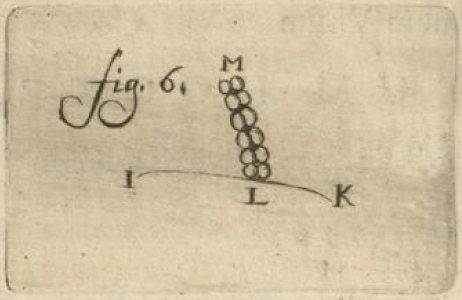
Figure 5: ram sperm through the same magnifying glass as the earlier figures, showing relative sizes.
Letter XLI
to: Den Heer Herman Boerhave. A.L.M. Philosoph: en Medic: Doctor; Professor der Kruyd-kunde, en Praktyk der Medicyne in de seer Vermaarde Academie te Leyden - philosopher and medical doctor; professor of herbal knowledge, and practicioner of medicine at the very renowned academy at Leiden
August 26, 1717
Dutch title: Zaad-ballen van eenen Ram onderzocht.
English title: Seed balls [testicles] of a ram examined.
|
Letter XLIII
to: Myne Heeren die van de Koninklyke Societeyt te Londen. - Sirs of the Royal Society of London
September 17, 1717
Dutch title: De uytwazemingen uyt onze lichamen door eene gelykenis verklaart.
English title: The transpiration from our bodies explained by a metaphor.
Letter XLIII
of September 17, 1717
to Myne Heeren die van de Koninklyke Societeyt te Londen. - Sirs of the Royal Society of London.
Van Leeuwenhoek's summary of the contents:
The transpiration from our bodies explained by a metaphor. Fatty parts, that also transpire, and remain on the face, seen through the magnifying glass. The skin of the outermost and innermost parts of the hands, fingers, arms, scraped off, and examined through the magnifying glass. No little pipes in the skin, or of its vessels through which the liquid and fat are expelled.
The little vessels covered with little scales. Width of the little vessels. But one generally can not see through the little vessels, when then are before the magnifying glass; because they lie folded over.
Another opening in the skin, much thinner than the little vessels. How closed off through the movement and rubbing of skin, intentionally inside the hand; and the little vesels are larger through there.
Demonstrating that the little vessels, that make up the skin, are shut if they push out no liquid: otherwise the cold and moist air would penetrate there.
A clean glass pressed against the face from time to time, and having waited less than a fourth of a minute: on which an enormous number of very little fat pieces was seen.
Waited a minute, and then a half hour with the glass pressed against the face: unbelievable multitude of fat pieces, that were on the glass the last time. A little section of skin depicted, with the mentioned little vessels.
Little pieces, with the third slice cut from the skin, and depicted. Other little pieces, cut with the second and third slice of the skin; in the cross-slices the little vessels were clearly recognized. Great multitude of little sweat vessels in the skin.
The pits described, standing inside the hand. Openings seen in there, and for what use?
The fatty parts on the glass depicted, that was pressed against the face. Comment on the great number of fatty parts, and watery fluids, that transpire out of our bodies. The openings, or little holes, of the skin do not always stand open; but closed, when no material flows out from them.
Through here it is obstructed so that no fluid can press from outside into the body. Little pieces cut from of the nail. Inconceivably many little openings seen there. The openings can not be called vessels, because no fluids are carried across. Why the little vessels in the skin do not seem to lie so orderly. The unevenness of the skin makes it so that we can not see the openings very well.
The number of little vessels calculated, according to the art, that exist in a thumb, in a foot, in a square foot, in a man's body. Also figured out how old a person must be, before his heart has produced so many pulse beats, when there are openings or little vessels in his skin.
How one must portray the shape of the skin. The skin of two teats from a cow cut off thin, and stretched out: which in the abundant openings are seen more clearly; and stand more orderly. The enormous number of little vessels, that are in the skin, once again shown. From here it is easy to understand how the smallest creatures, the louse, the flea, etc. take their nourishment out of the skin of animals: as needing to make no new little holes there; but only to stick its hooks through the holes of the skin; and in that way to injure the little blood vessels.
|
Letter XLIII
of September 17, 1717
to Myne Heeren die van de Koninklyke Societeyt te Londen. - Sirs of the Royal Society of London.
Van Leeuwenhoek's summary of the contents:
De uytwazemingen uyt onze lichamen door eene gelykenis verklaart. Vet-deelen, die ook uytwaassemen, en op het aangezicht blyven zitten, voor het Vergroot-glas bezien. De huyd van het buytenste en binnenste der handen, vingeren, armen, afgeschrapt, en door het Vergroot-glas onderzocht. Geen spaatzie in de huyd, of daar zyn vaatjens, waar door de vocht en het vet uytgestooten worden.
Die vaatjens met schobbetjens bekleedt. Wydte van die vaatjens. Maar door die vaatjens, als ze voor het Vergroot-glas staan, dan men doorgaans niet zien; om dat ze toegevouwen leggen.
Andere openingen in de huyd, veel dunder als die vaatjens. Hoe door de beweeging en wryving de huyd, voornamentlyk binnen de hand, afslyt; en de vaatjens daar door grooter worden.
Bewezen dat de vaatjens, die de huyd uytmaaken, zich toesluyten als ze geen vocht uytstooten: anders zoude de koude en vochtige lucht daar indringen.
Een schoon glas van tyd tot tyd, en minder als een vierde van een minuit gewacht hebbende, tegen het aangezicht gedrukt: waar op dan een overgroot getal van zeer kleyne vet deelen was te zien.
Een minuit, en een half uur gewacht met het glas tegen het aangezicht te drukken: ongelooftelyke menigte van vet-deelen, die de laatste reize aan het glas zaten. Een klein gedeelte van de huyd, met de gemelde vaatjens, afgebeeldt.
Stukjens, met de derde sneede van de huyd gesneeden, en afgebeeldt. Andere stukjens, met de tweede en derde sneede van de huyd gesneden; waar in de doorgesnedene vaatjens klaarlyk te bekennen waren. Groote menigte van zweet-vaatjens in de huyd.
De putjens, binnen in de hand staande, beschouwt. Openingen daar in gezien, en waar toe dienende?
De vet-deelen aan het glas, dat tegen het aangezicht gedrukt was, afgetekend. Aanmerking op het groot getal der vet-deelen, en waterachtige vochten, die uyt ons lichaam uytwaassemen. De openingen, or gaatjens, van de huyd staan niet altyd open; maar sluyten zich toe, als ze geene stoffe uytvoeren.
Hier door word belet, dat 'er geen vocht van buyten in 't lichaam kan dringen. Stukjens van den nagel gesneden. Onbedenkelyk veele zeer kleine openingen daar in gezien. Die openingen konnen geene vaten genoemt worden, om dat ze geene sappen overvoeren. Waarom de vaatjens in de huyd zoo ordentelyk niet schynen te leggen. De ongelykheit van de huyd maakt dat we de openingen zoo wel niet konnen zien.
Het getal der vaatjens, die in eenen duym, in eenen voet, in eenen quadraatvoet, in een mans lichaam staan, naar de kunst uytgerekent. Ook uytgecyfert hoe out een mensch moet zyn, eer dat zyn hert zoo veele pols-slagen heeft te weeg gebragt, als 'er openingen of vaatjens zyn in zyne huyt.
Hoe men zich het maakzel van de huyt moet verbeelden. De huyt van twee speenen van een Koe dun afgesneden, en opgespannen: waar in de menigvuldige openingen noch klaarer zyn gezien; en ordentlyker stonden. Het overgroot getal der vaatjens, die in de huyt zyn, nochmaal aangetoont. Hier uyt is het ligt te begrypen hoe dat de kleynste Schepzels, de Luys, de Vlooy, enz. haar voetzel uyt de huyt der Dieren haalen: als behoevende geene nieuwe gaatjens daar in te maaken; maar alleenlyk door de gaatjens van de huyt haare angels heene te steeken; en alzoo de kleyne bloed-vaatjens te quetzen.
|
|
Figure 1: section of skin from human hand showing pores
Letter XLIII
to: Myne Heeren die van de Koninklyke Societeyt te Londen. - Sirs of the Royal Society of London.
September 17, 1717
Dutch title: De uytwazemingen uyt onze lichamen door eene gelykenis verklaart.
English title: The transpiration from our bodies explained by a metaphor.
|
Figure 2: section of human skin showing pores
Letter XLIII
to: Myne Heeren die van de Koninklyke Societeyt te Londen. - Sirs of the Royal Society of London.
September 17, 1717
Dutch title: De uytwazemingen uyt onze lichamen door eene gelykenis verklaart.
English title: The transpiration from our bodies explained by a metaphor.
|
Figure 3: close-up of fat transferred to slide by pressing the slide against the human face near the nose
Letter XLIII
to: Myne Heeren die van de Koninklyke Societeyt te Londen. - Sirs of the Royal Society of London.
September 17, 1717
Dutch title: De uytwazemingen uyt onze lichamen door eene gelykenis verklaart.
English title: The transpiration from our bodies explained by a metaphor.
|
Figure 4: close-up of fat transferred to slide by pressing the slide against the human face near the nose
Letter XLIII
to: Myne Heeren die van de Koninklyke Societeyt te Londen. - Sirs of the Royal Society of London.
September 17, 1717
Dutch title: De uytwazemingen uyt onze lichamen door eene gelykenis verklaart.
English title: The transpiration from our bodies explained by a metaphor.
|
Figure 5: close-up of fat transferred to slide by pressing the slide against the human face
Letter XLIII
to: Myne Heeren die van de Koninklyke Societeyt te Londen. - Sirs of the Royal Society of London.
September 17, 1717
Dutch title: De uytwazemingen uyt onze lichamen door eene gelykenis verklaart.
English title: The transpiration from our bodies explained by a metaphor.
|
Letter XLIV
to: Myne Heeren die van de Koninklyke Societeyt te Londen. - Sirs of the Royal Society of London.
October 8, 1717
Dutch title: De wortel Pareira Brava, die zoo in de Genees-kunde geprezen word, voor het Vergroot-glas gebragt.
English title: The root Pareira Brava, that is so prized in medicine, brought before the magnifying glass.
Letter XLIV
of October 8, 1717
to Myne Heeren die van de Koninklyke Societeyt te Londen. - Sirs of the Royal Society of London.
Van Leeuwenhoek's summary of the contents:
The root Pareira Brava, that is so prized in medicine, brought before the magnifying glass. Its very large pori spread through this root: how the same lies placed. Little slices cut off, and made wet. The little slices, and the water, examined through the magnifying glass. Clear and small little pieces drawn from the wood into the water, that seemed like salt.
Various figures of the same little pieces. Amazement at the structure of the same root. A little bit of the root cooked in rainwater; and that rainwater examined. Inconceivable multitude of little particles discovered in the water.
A little bit of the water mixed with the writer's blood: through which the blood globules were spread. How the blood globules got there through a bow. Further form of the globules. How the blood globules, in the same observation, were sticking together, as one firm body. It is easy to understand how the blood globules are so soft, and in the air stick together through the least touch, but in the blood vessels, where they thrust and rub against each other, they do not stick together. More than a third of the root is composed of little sheaths. In the little sheaths lie the imagined salt pieces.
How its grip is made stronger by drying, and have special shapes. How the little particles, enclosed in the mentioned little sheaths, change through the heat of the fire into a mealy material. The material, closed up in the sheaths of the Pareira Brava root, are also found in China and Irias roots. This material, in the mentioned roots, was also provided with seams, the same as for the wheat grains. It is also thought that the little particles, closed up in the sheaths of Pareira Brava, also have such seams.
How the same little pieces, administered medicinally, are divided by the warmth and fluid of the body into an inconceivable number of little pieces. Difficulties had, in order to discover the salt pieces in Pareira Brava.
Why such a thing not successful. Further attempts made, to discover the firm salt of the same root. Finally it was successful, with the root burned completely white, and an enormous number of salt pieces discovered in the same. These salt pieces were very easily extracted in a liquid material.
It is not well understood how the salt pieces, that are joined so firmly to the wood, can be of any use for the human body. Through a slow sticking together of the salt pieces the writer has discovered the silver shapes; that are also indicated.
The little shapes also found in the very small salts. Inconceivable smallness of the smallest salt particles, that are also sitting firmly around the larger. Is concluded that the salt parts have also ended up in the water; the root was first cooked and burned, although it was not seen there. The larger salt parts were stuck together from smaller ones; and were few in number. The smallest of all salt particles had the same shape as the larger. The same root burned on a thin rod of purified silver, so that no parts of the charcoal would mix with the burned material. And nevertheless, the same salt pieces found.
|
Letter XLIV
of October 8, 1717
to Myne Heeren die van de Koninklyke Societeyt te Londen. - Sirs of the Royal Society of London.
Van Leeuwenhoek's summary of the contents:
De wortel Pareira Brava, die zoo in de Genees-kunde geprezen word, voor het Vergroot-glas gebragt. Door dien wortel zyn zeer groote pori [Lat.] verspreit: hoe dezelve geplaatst leggen. Kleine schyfjens daar afgesneden, en nat gemaakt. Die schyfjens, en dat water, door het Vergroot-glas onderzocht. Heldere en kleyne deeltjens uyt het hout in 't water getrokken, die naar zout geleeken.
Verscheide figuuren van dezelve deeltjens. Verwonderens waardig t' zamenstel van den zelven wortel. Een weynigje van den wortel in regenwater gekookt; en dat regenwater onderzocht. Onbedenkelyke menigte van kleyne deeltjens in dat water ontdekt.
Een weynigje van dat water met des Schryvers blood vermengt: waar door de bloet-bolletjens zeer van een verspreyt wierden. Hoe de bloet-bolletjens daar door een bogt kreegen. Vordere gestalte van die bolletjens. Hoe de bloet-bolletjens, in dezelve waarneeminge, t' zamen-gestremt zynde, als een vast lichaam maakten. 't Is met wel te begrypen hoe dat de bloet-bolletjens zoo zacht zynde, en in de lucht door de minste aanraaking t' samen stremmende, in de aderen, daar ze malkander zoo stooten en wryven, niet en stremmen. Meer als het derde deel van den wortel bestaat uyt vliesjens. In de vliesjens leggen de ingebeelde zout-deelen.
Hoe dat die door het indroogen aan malkander als zyn vastgepakt, en byzondere figuuren hebben. Hoe die deeltjens, in de gemelde vliesjens opgeslooten, door de hitte van 't vuur als in eene meelachtige stoffe veranderen. De stoffe, in de vliesjens van den wortel Pareira Brava opgeslooten, word ook in de wortelen China en Irias gevonden. Deze stoffe, in de gemelde wortelen, was ook voorzien met naaden, gelyk de Tarwegreyntjes. Het staat ook te denken dat de deeltjens, in de vliezen van Pareira Brava opgeslooten, zoodanige naaden hebben.
Hoe dezelve deeltjens, ter geneezinge ingegeven, door de warmte en de vocht van 't lichaam in onbegrygelyk kleyne deeltjens gedeelt worden. Moeite gedaan, om de zout-deelen in de Pareira Brava te ontdekken.
Waarom zulks niet wilde gelukken. Vordere poogingen gedaan, om het vaste zout van de zelven Wortel te ontdekken. Eyndelyk is het gelukt, met den wortel gansch wit te branden, een overgroot getal van zout deelen in den zelven te ontdekken. Deze zout-deelen wierden zeer ligtelyk ontdaan in eene vochtige stoffe.
Het is niet wel te begrypen hoe die zout-deelen, die zoo vast aan 't hout vereenigt zyn, eenig nut konnen doen aan 's menschen lichaam. Door eene langzaame stremming van de zout-deelen heeft de Schryver der zelver figuuren ontdekt; die ook aangewezen worden.
Die figuurtjens ook gevonden in de zeer kleyne zoutjens. Onbedenkelyke kleynheyt van die kleynste zout-deeltjens, die ook aan de grootere rondomme vast zitten. Word beslooten dat die zout-deelen ook geweest waren in 't water; daar de wortel eerst in gekookt en gebrandt was, schoon daar in niet gezien wierden. De grooter zout-deelen waren uyt kleyndere t' zamen gestremt; en weynig in getal. De allerkleynste zout-deeltjens van dezelfde figuur met de groote. Dezelve wortel op een staafje fyn en gezuyvert zilver gebrandt, op dat geene deelen van de houtskool zich met de gebrande stoffe zouden vermengen. En evenwel dezelve zout-deelen gevonden.
|
|
Figure 1: five different types of shapes of salts found in Pareira Brava root
Letter XLIV
to: Myne Heeren die van de Koninklyke Societeyt te Londen. - Sirs of the Royal Society of London.
October 8, 1717
Dutch title: De wortel Pareira Brava, die zoo in de Genees-kunde geprezen word, voor het Vergroot-glas gebragt.
English title: The root Pareira Brava, that is so prized in medicine, brought before the magnifying glass.
|
Figure 2: coagulation of salt pieces in Pareira Brava root steeped for twenty-four hours
Letter XLIV
to: Myne Heeren die van de Koninklyke Societeyt te Londen. - Sirs of the Royal Society of London.
October 8, 1717
Dutch title: De wortel Pareira Brava, die zoo in de Genees-kunde geprezen word, voor het Vergroot-glas gebragt.
English title: The root Pareira Brava, that is so prized in medicine, brought before the magnifying glass.
|
Figure 3: various shapes of coagulated salt pieces in Pareira Brava root
Letter XLIV
to: Myne Heeren die van de Koninklyke Societeyt te Londen. - Sirs of the Royal Society of London.
October 8, 1717
Dutch title: De wortel Pareira Brava, die zoo in de Genees-kunde geprezen word, voor het Vergroot-glas gebragt.
English title: The root Pareira Brava, that is so prized in medicine, brought before the magnifying glass.
|
|
The Theater of Nature
What van Leeuwenhoek accomplished.
How he was received by the people of his time.
What happened to his microscopes.
After his election as a Fellow of England's Royal Society in 1680, when he was 47, Antony van Leeuwenhoek entered the prime of his career. By then, he had seen red blood corpuscles and sperm cells in a variety of animals, including man, as well as what we now call protozoa and bacteria. He had written several dozen letters to the Royal Society, and excerpts from about half of them had been published in the Society's journal, Philosophical Transactions.
He didn't stop there. Over the next forty years, van Leeuwenhoek sent several hundred letters to the Royal Society. By his death in 1723, all or parts of almost a hundred and twenty letters had been translated and published in Philosophical Transactions in just over a hundred articles. Van Leeuwenhoek was their most published author, by far.
In addition, he wrote over a hundred letters that were not published in Philosophical Transactions and were addressed to the wide range of correspondents that his fame brought him. Van Leeuwenhoek published these letters himself in Dutch and Latin as detailed on the Publications page.
Almost all of van Leeuwenhoek's letters were accompanied by illustrations, and the letters referred to them. He employed anonymous artists (called limners or draughtsmen) to draw them. They were then re-drawn on copper plates by etchers in London for Philosophical Transactions and Holland for his self-published volumes, and finally printed as reverse images on paper. Compared to the masterpieces that Robert Hooke drew himself for Micrographia, the drawings that van Leeuwenhoek provided are informative but less elegantly drawn.
In 1692, when as it turns out van Leeuwenhoek was not halfway through his long career, Hooke delivered a lecture about the history and future of both the telescope and microscope.
Much the same has been the Fate of microscopes, as to their Inventions, Improvements, Use, Neglect and Slighting, which are now reduced almost to a single votary, which is Mr. Leeuwenhoek;
besides whom, I hear of none that make any other Use of that Instrument, but for Diversion and Pastime, and that by reason it is become a portable Instrument, and easy to be carried in one's Pocket.
At the time, the astronomer Edmond Halley, ally of Isaac Newton, had been editor of Philosophical Transactions for volume 16, and van Leeuwenhoek had not had a letter published in seven years, since 1685. Halley and Newton had little use for microscopes and they were long-time opponents of Hooke, who was van Leeuwenhoek's chief proponent at the Society. Hooke continues:
If we enquire into the Reason of this Change of Humour, in Men of Learning, in so short a time, we shall find that most of those, who formerly promoted these Enquiries, are gone off the Stage; and with the present Generation of Men the Opinion prevails, that the Subjects to be enquired into are exhausted, and no more is to be done:
Besides they pretend that all the Discoveries that have been hitherto, or that can be made, for the future by these Instruments will afford no gainful profit, and all other Notions are insipid with them, besides such as bring ready Money.
All the other contemporary microscopists studied the microscopic structure of macro organisms, as did Leeuwenhoek, and perhaps those subjects appeared to be "exhausted". Van Leeuwenhoek alone discovered the living world of microorganisms, where the subjects were far from exhausted.
Halley was about to be replaced as editor of Philosophical Transactions by Robert Waller and then Hans Sloane, who would again begin publishing van Leeuwenhoek. Indeed, as Hooke predicted, there was much more to be done:
But those, who make such estimates, may, perhaps, find themselves very much mistaken in their Judgment, if the Subjects are duly prosecuted, as they are capable of so being.
For, as to the Discoveries that may be made in both Kinds, I conceive they are vastly greater, both for Number and Value, than those few that have been already made; and not only for the Information of the Intellect, but what answers their greater Objection, even for the increasing their Treasure.
While he was out of favor with editor Halley during those years, van Leeuwenhoek wrote dozens of letters, most of which he sent to the Society and by all accounts were not even acknowledged by Halley. Van Leeuwenhoek published them himself in parallel Dutch and Latin editions.
Hooke concludes that the microscope:
is become almost out of Use and Repute: So that Mr. Leeuwenhoek seems to be the principal Person left that cultivates those Enquiries. Which is not for Want of Considerable Materials to be discover'd but for Want of the inquisitive Genius of the present Age.
In fact, it would take more than a hundred years before the compound microscope would catch up to van Leeuwenhoek's in magnifying power and resolution. It would be even longer than that before scientists could put van Leeuwenhoek's microbiological discoveries into a context. They began re-discovering van Leeuwenhoek's protozoa and bacteria, related them in a Linnaean taxonomy, gave them names, and began understanding how van Leeuwenhoek's "animalcules" enabled human life and occasionally threatened it, i.e., "germs".
It comes down to this: van Leeuwenhoek had an instrument using a dead-end design that was an order of magnitude better than anyone else had. What he saw was very difficult for anyone else to see. He was so far ahead of his time that his discoveries had no context. What he saw, no one suspected, understood, or knew what to do with.
Unlike his contemporary Vermeer, whose death at an early age meant the loss of all the paintings he never lived to paint, van Leeuwenhoek discovered only things that were already there. Had he died early, everything that he discovered would have been discovered by someone else.
So van Leeuwenhoek's accomplishment, sustained for half a century, is as much an individual accomplishment as a scientific one. He had the leisure, the motivation, and the habits of mind that he needed. He was tenacious and honest, and he had an eye for the important detail.
What he discovered
Van Leeuwenhoek's own cabinet of nature was a little harder to display, but none the less varied than those of his friend Frederick Ruysch.
In hindsight, Van Leeuwenhoek's early discoveries of red blood cells, protozoa, bacteria, and sperm receive most of the attention. They also needed the strongest lenses to see, especially the bacteria.
However, van Leeuwenhoek reported his observations of a wide range of other curiosities and wonders. Harting's Het Mikroskoop in 1850 has a list, repeated in Haaxman's 1875 biography, of some of the specimens that were still attached to the hundreds of microscopes auctioned in 1747 after the death of Maria, van Leeuwenhoek's daughter. Harting grouped them.
For many of them, lenses magnifying between 100 and 200 times would have been appropriate for what van Leeuwenhoek wanted to see.
van Leeuwenhoek's specimens
Animal |
Plant |
muscle fibers of whale, codfish, and the heart of a duck
transverse sections of bladder and fish muscle
scales from human skin
crystalline lens of an ox
blood-corpuscles of human
liver of pig
bladder of ox
papillae from ox tongue
scale of perch, sole
spinning apparatus of silk-worm
sting and sheath and feet of flea
eyes of dragon fly and beetle
sting, skin, and ovipositor of louse
red coral
section of oyster shell
embryo oysters in glass tube
hair of sheep, beaver, elk, bear, human nose
spinning apparatus, thread, sting, teeth, and eyes of spider
brains, optic nerve, tips of feet of fly |
transverse and longitudinal sections of:
elm-wood
fir-wood
ebony
lime-wood
oak-wood
cinnamon
cork
rush
section of fossil wood
germ of rye seed
vascular bundles of nutmeg |
Mineral |
white marble
rock-crystal
diamond
gold-leaf
gold-dust
silver-ore
saltpeter
crystals |
Famous visitors
Judging by the list of prominent visitors to his home (see right), van Leeuwenhoek was known and admired among the intellectual and political elite. Judging from his frequent complaints and attempts to control access to his house, van Leeuwenhoek was also known and admired among the curious who must have read his books and made the pilgrimage to Delft.
On January 14, 1710, he wrote:
The same Gentlemen had two other Scottish gentlemen in his company, all of whom I gladly received, and so will I do all those who have an introduction from Mr. Sloane. But if I should receive everyone who comes to my house, or tries to come, I should have no freedom at all, but be quite a slave.
And eighteen months later, on August 18, 1711:
You are displeased at not being welcomed at my house. I beg you please not to take it ill, seeing that we send off everyone who tries to visit me, unless they have some sort of introduction. ...
You were sent away especially because you were not known, and because some 8 or 10 days earlier no less than 26 people came to see me within four days, all of them with introductions (except a Duke and a Count, with their Tutor), which made me so tired, that I broke out in a sweat all over.
His Death
In the final year of his long life, van Leeuwenhoek wrote five letters and had them all translated into Latin before he sent them. Other than the 1679 letter about human sperm and the letter of January 15, 1721, these were the only letters published in Latin in Philosophical Transactions. However, for the thirty years he self-published his collected letters, they were all translated into Latin, so he certainly had access to translators.
His friend, publisher Reinier Boitet, described the scene (Dobell translation):
Six-and-thirty hours before his death, when his limbs were already growing numb, the fire of his ardour glowed still so bright, that, with lips stammering and well-nigh stiff, he directed his thoughts to be set down on paper regarding a kind of sand which a certain distinguished gentleman, a director of the East-India Company, had handed over to him, to find out whether any gold were concealed therein.
Van Leeuwenhoek summoned his friend Johan Hoogvliet, who wrote in his cover letter to Philosophical Transactions editor James Jurin:
Our venerable old van Leeuwenhoek, being already in the throes of death, though none the less mindful of his art, ordered me to be called to him; and raising his eyes, now heavy with death, kept asking me in half-broken words if I would translate these two letters out of our native tongue into Latin, and send them, most distinguished Sir, to you.
Philosophical Transactions editor James Jurin published them, in Latin, along with Hoogvliet's cover letter, in volume 32.
Van Leeuwenhoek died in Delft on August 26, 1723, just shy of his 91st birthday, of bronchial pneumonia.
His Will
Van Leeuwenhoek's first wife, Barbara de Meij, died in 1666, and his second wife, Cornelia Swalmius, in 1694, so he lived the last thirty years of his life as a widower.
He and Barbara had five children, but only Maria survived infancy. Maria, who never married, outlived her father by twenty years. She took care of van Leeuwenhoek for the last half of his life, had his memorial constructed in the Nieuwe Kerk, and outlived him by two decades. She is buried beside him.
According to an article by E.W. van den Burg and G.J. Leeuwenhoek first published in 1995, based on recent research of records from the city archives of Delft, van Leeuwenhoek left a small but still valuable estate.
His will, registered in 1712, named his daughter Maria as beneficiary. At her death in 1745, after deduction of expenses and bequests, van Leeuwenhoek's estate amounted to 59,389 guilders and 4 stuivers, and Maria's amounted to 15,289 guilders and 14 stuivers. It designated several relatives to receive obligaties, or bonds (see right). The will was revised a few times before his death and then before hers to account for the death of some of these beneficiaries.
As best I can tell, the other valuable possessions were his land, not only his house, but some adjacent and nearby property. I do not know how to translate 60,000 guilders into today's money. According to the same article, none of his close relatives left estates of a value even close to van Leeuwenhoek's, so it seems as those he was the most prosperous member of his family.
His sinecures amounted to 800 guilders per year, about what a City Secretary earned. Fifty years of these sinecures would thus have amounted to 40,000 guilders if he had saved every stuiver. Since there is not any record of his having inherited anything from others, this estate must have come from his investments in land and bonds. We do not know how long he maintained his drapery business or under what circumstances he stopped doing it. Did he sell it?
The article reports on documents from the Delft city archive:
Antoni Leeuwenhoek and Carel Serval together on May 8, 1708 buy from the heirs of Annetje Pieters van der Vis, widow of Pieter Jans Hofland, a house and yard on the north side of the Nieuwstraat in Delft, abutting on the east Pieter van der Wild and on the west said Carel Serval, stretching from the street to behind the mansion, previously having belonged to the widow of Mayor Joost van Lode Steijn and now belonging to Antoni said Leeuwenhoek. The purchase price is 550 guilders in cash.
Serval takes the front half with the house and its income. Van Leeuwenhoek takes the back half, which abuts the back of his property on the Hippolytusbuurt. The purchase price of a house and yard for 550 guilders in 1708 compared to an estate of 60,000 guilders two decades later suggests that van Leeuwenhoek was quite well-to-do by the end of his life.
The city archives also have a tax assessment record for seven guilders for a property on the east side of the Oosteinde at the corner of the Nieuwe Langendijk, which was owned by van Leeuwenhoek. The little we know about his parents and childhood suggest that he grew up on the Oosteinde. Perhaps he inherited this house from his father?
So one possible scenario is that his drapery business was prosperous enough to let him invest in the bonds and that he lived the last decades of his life on the interest. I welcome hearing from anyone with more information or a different scenario.
His Microscopes
He bequeathed twenty-six microscopes to the Royal Society. They were duly described and catalogued, only to have "disappeared" from the archives by the mid-1800's. The rest, his will stated, should be sold "in a bundel".
Of the three hundred, at least (some sources say five hundred), microscopes that van Leeuwenhoek made, only nine are known today, plus an aalkijker whose provenance is not completely certain. Of the hundreds of lenses that he made, only fourteen survive today. The Boerhaave Museum in Leiden has the largest collection in any one place, and its library has the best collection of works about van Leeuwenhoek.
In 2009, Christie's in London auctioned one of van Leeuwenhoek's microscopes that had been on display in the Boerhaave, estimating pre-sale a high bid of 100,000 euro. It sold for 313,250 euro, the highest price ever paid for a scientific instrument from the Dutch Golden Age and a testimony to the significance of van Leeuwenhoek today.
Van Leeuwenhoek's papers are lost. His will states:
It is our desire that in one box or suitcase will be closed up all the unpublished writings and letters, written by me, Leeuwenhoek, concerning my discoveries, and ten cut copper plates, belonging to some unpublished letters, for which was paid more than five hundred guilders as well as the translation into Latin, for which was paid seventy guilders and that so long as the villain [word deleted later by van Leeuwenhoek] Adriaan Beman is living, both those letters and those still to be written afterwards, may not be printed by his son or next of kin.
From 1693 to 1702, van Leeuwenhoek had published half a dozen volumes of letters printed by his next door neighbor Henrik van Krooneveld. For his Send-Brieven in 1718, he used Adriaan Beman, and that relationship apparently did not go well.
After van Leeuwenhoek's death, two other articles in Philosophical Transactions concerned him directly. Within a year, James Jurin published, in volume 32, "Some Account of Mr. Leeuwenhoek's Curious Microscopes, Lately Presented to the Royal Society. By Martin Folkes, Esq; Vice-President of the Royal Society".
Fifteen years later, Henry Baker wrote "An Account of Mr. Leeuwenhoek's Microscopes", which was published in volume 41, 1739. These two articles provide much of what we know about the microscopes, confirmed by direct analysis of the few surviving, which were probably not among those bequeathed to the Royal Society.
Van Leeuwenhoek today
Van Leeuwenhoek had no sons or brothers who survived to have children, so the surname is rare today. All the descendants come from the family of van Leeuwenhoek's uncle Huijch. Two of Huijch's sons, Lambrecht and Maerten, lived long enough to have sons. Today, the Dutch telephone books list only one private person with the "van" (an elderly widow who lives near Amsterdam) and about two dozen without it. They all still live near Delft.
There are a handful of businesses named after van Leeuwenhoek, and many, many streets. The Antoni van Leeuwenhoek Ziekenhuis, the cancer hospital in Amsterdam, was founded over a hundred years ago and named after him because "cancer" was a shunned word. The hospital is today the most common reminder of his name in everday Dutch life.
In 1877, the Royal Netherlands Academy of Arts and Sciences established the Leeuwenhoek Medal, awarded once each decade to the person judged to have made the most significant contributions to the "advancement of microbiology". Louis Pasteur won it in 1895.
Since 1949, the Royal Society in London has awarded and published an annual Leeuwenhoek Lecture on the subject of microbiology.
The city of Delft, saturated with Everything Vermeer, has put a plaque on the wall of the building -- still with the shop downstairs, housing upstairs -- that replaced van Leeuwenhoek's Gouden Hoofd. The city also has a small display case outside the room that he tended in the Stadhuis. And there is the memorial in the Oude Kerk. See the Biography page.
In a recent public poll to determine the "Greatest Dutch" men and women, van Leeuwenhoek finished fourth, ahead of other top-ten finishers Erasmus, Anne Frank, Rembrandt, and Vincent van Gogh. While the press coverage referred to van Leeuwenhoek's discoveries as baanbrekende, pioneering, it also called him ongeschoolde hobbyist, an uneducated dilettante.
Conclusion: How was he able to do it?
Van Leeuwenhoek did not inherit any wealth, so he had a day job -- his drapery business -- and he had two civic sinecures. Most importantly, he preserved his independence and autonomy by, in a passive way, controlling access to his time and his knowledge.
He did no teaching. He wrote to Leibniz on September 28, 1715:
To train young people to grind lenses, and to found a sort of school for this purpose, I can't see there'd be much use ... because most students go there to make money out of science, or to get a reputation in the learned world. But in lens-grinding, and discovering things hidden from our sight, these count for nought.
He had no professional affiliations beyond the Royal Society, and they were in England. He never visited their offices or attended a meeting, at which he would have been welcomed. Indeed, he never left Holland after he began researching.
While he took lots of suggestions, he had no supervision. He did it with his own money on his own time in his own way as an outsider to the politics of the academic and religious communities.
Leibnitz wrote to Christiaan Huygens on 2 March 1691:
I prefer a Leeuwenhoek who tells me what he sees to a Cartesian who tells me what he thinks.
Van Leeuwenhoek wrote on June 12, 1716:
I've spent more time than many will believe [making microscopic observations], but I've done them with joy, and I've taken no notice those who have said why take so much trouble and what good is it?
Equally importantly, van Leeuwenhoek lived at a time before the development of what we call "academic disciplines" and "science", a noble quest indeed, but one that has led to our world of increasingly narrow specializations, massive digitized data sets, hyper-competitive funding proposals, and an unreadable quantity of relevant publications.
If he were alive today, what would van Leeuwenhoek specialize in? If he had a job, an official position, an agenda of committee meetings, if he had to write funding proposals and work on teams and ask permission or get authorization to do everything he did, that is, if he were in our laboratories and classrooms today, sitting next to you, would he accomplish as much? Will you?
What do you do when you see things that no one has ever seen before?
Wat doe je als je dingen zie dat niemand ooit heeft gezien?
What motivated scientists before the introduction of institutional incentives?
My work, which I've done for a long time, was not pursued in order to gain the praise I now enjoy, but chiefly from a craving after knowledge, which I notice resides in me more than in most other men.
|
Famous visitors
According to the biography of van Leeuwenhoek published by P. J. Haaxman in 1875, p. 111, a long list of famous and historical personages visited van Leeuwenhoek.
Some are discussed elsewhere on this web: Constantijn and his son Christiaan Huygens,
Reinier de Graaf, Jan Swammerdam, Hans Sloane, and Thomas Molyneux. Others are not included because I cannot confirm the visit (some English and Polish nobility).


van Leeuwenhoek's
will
Burg, E.W. van den en G.J. Leeuwenhoek,(Van) Leeuwenhoek,
Kronieken, Tijdschrift van de Genealogische Vereniging Prometheus van de TU-Delft, 4e jaargang 1995, p. 133-183.
Van Leeuwenhoek bequeathed bonds to some close relatives.
He had no surviving brothers, but three sisters lived long enough to marry and two of them had children. Sorting out the family is complicated because they used the same first names repeatedly. In addition, van Leeuwenhoek's sister Margareta married the son of van Leeuwenhoek's mother's second husband. Also, his sister Geertruijt Leeuwenhoek married Claes van Leeuwen.
Sister Margareta married Jan Molijn (son of her mother's second husband, Jacob Molijn) and had two children. Her daughter Marija had a son Jan Haaxman, and her son Anthony de Molijn had two daughters, Margareta (married to Arnoldus van den Heuvel) and Geertruijt.
Sister Geertruijt married Claes Jansz. van Leeuwen, and they had sons Anthony and Jan, who was married to Rijkje.
Three others who received bequests were Adriaan Swalmius, brother of van Leeuwenhoek's second wife, Marija Strik, his achternicht, a distant relative, and an unnamed maid.
Obligaties / Bonds
Anthony de Molijn - 2,500 guilders
Margareta de Molijn - 1,000 guilders
Geertruijt de Molijn - the income from two obligaties totaling 2,600 guilders at 4%
Jan Haaxman - 3,500 guilders
Anthony van Leeuwen - use of Rijkje van Leeuwen's bonds totaling 5,000 guilders
Rijkje van Leeuwen - 5,000 guilders
Adriaan Swalmius - 500 guilders
Marija Strik - 270 guilders
unnamed maid - 300 guilders
Rijkje, Jan and Philips van Leeuwen each got a silver serving bowl and some other jewelry, including for Jan two silver candle sticks made by van Leeuwenhoek.
For all the remaining property, Jan and Philips van Leeuwen were the heirs and also were named executors of the estate.
Maria, as it turned out, survived her father by twenty years. Her will followed the spirit of her father's, though she had to make changes because several of the earlier beneficiaries had died.
Dirck Haaxman, grandson of van Leeuwenhoek's sister Margareta, got the house on the Hippolytusbuurt.
Van Leeuwenhoek memorial
This memorial display case is on the wall just to the right of the door to the room in Delft's Stadhuis, city hall, for which van Leeuwenhoek received a sinecure as camerbewaarder to keep clean and prepared for meetings.
On the left are some basic details about his life, and in the center is a replica microscope. Under it is a diagram of the microscope.

|